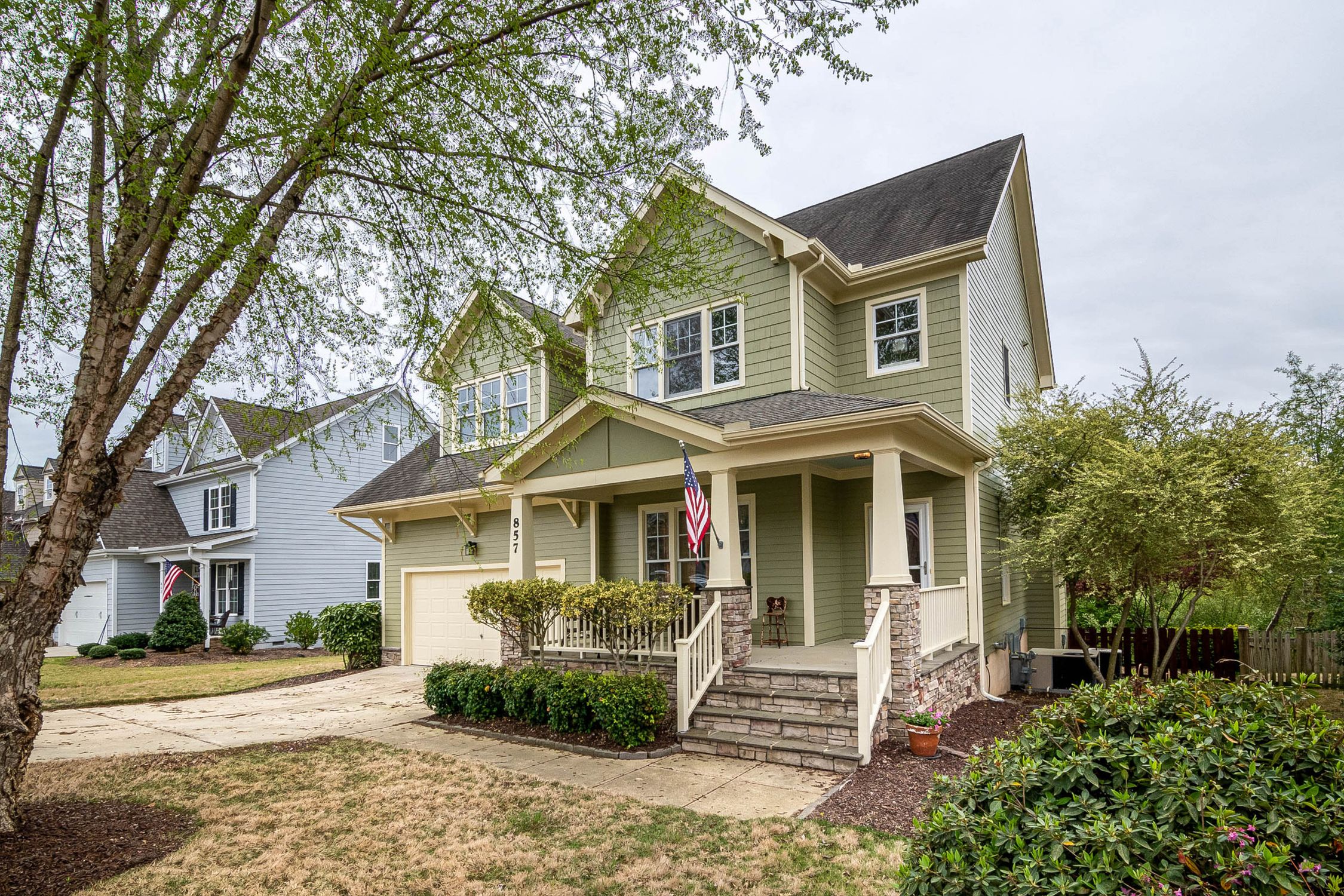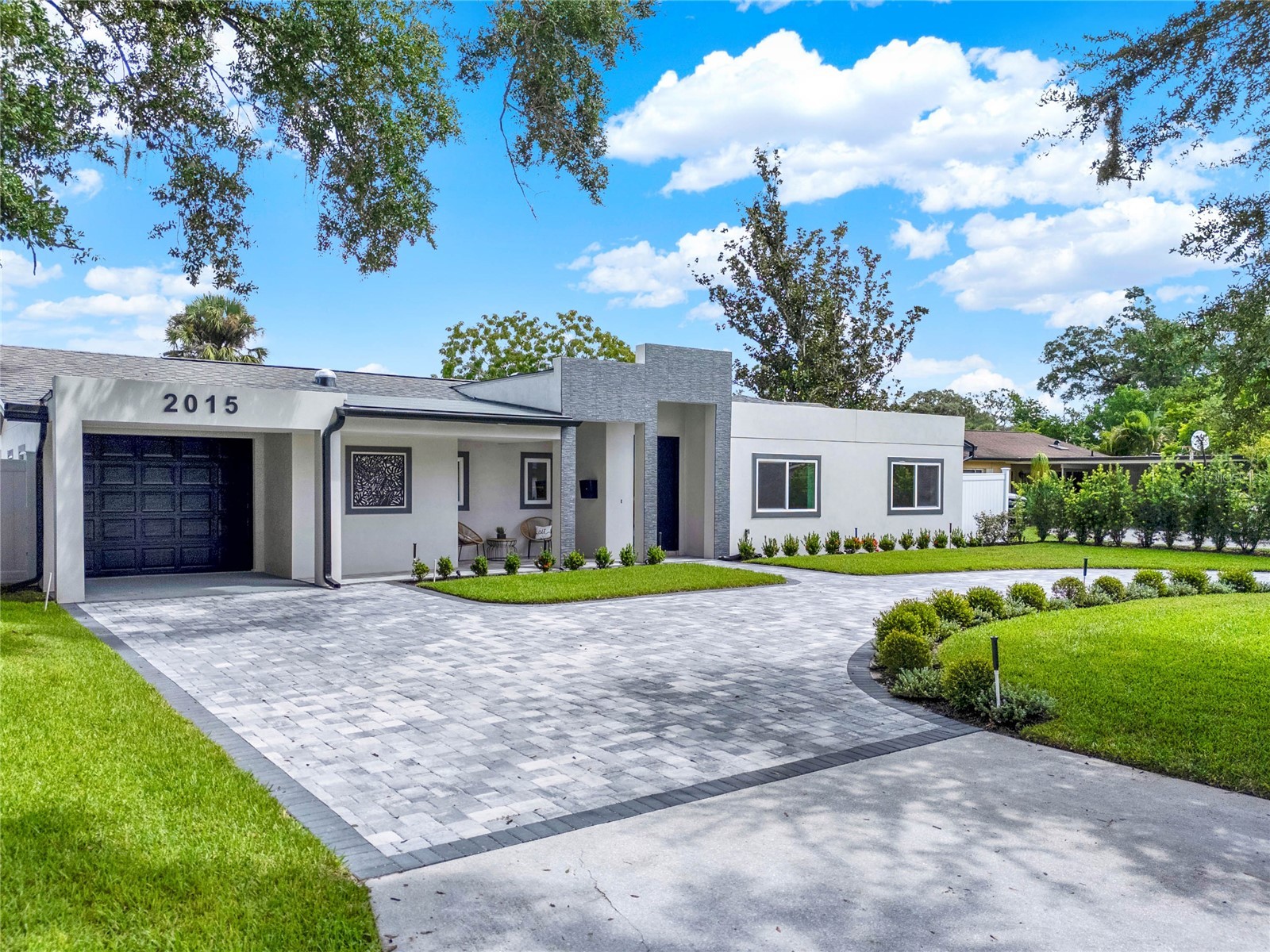

You are standing in the driveway of a house in Winter Garden and your agent hands you a phone with a document on it, and it needs your signature before you can walk through the front door. If nobody has explained this to you, it feels like a sales tactic. It is not. It is a national rule that took effect on August 17, 2024, and two years later it is still the single most misunderstood part of buying a home — especially for buyers arriving from New York, New Jersey, or Connecticut, where the old handshake version of this was invisible and nobody ever asked them to sign anything.
Here is the whole thing, in plain language, with real Central Florida numbers.
What Actually Changed on August 17, 2024
Two rules took effect nationwide that day, as a result of the National Association of REALTORS litigation settlement. Both are still in force in August 2026:
- A written buyer agreement is required before you tour a home. Not before you make an offer — before you walk through the door, whether in person or on a live video tour. The agreement has to state what your agent is paid, and it cannot be open-ended.
- No offer of buyer-agent compensation may appear anywhere in the Multiple Listing Service. Not in a compensation field, not in the private agent remarks, not anywhere. For decades the buyer-side fee was published in the Multiple Listing Service and every agent could see it. That is gone.
Notice what did not change. Sellers can still pay the buyer's agent. Commissions are still negotiable — they always were. And Florida's own brokerage law was untouched.
One honest caveat, because you deserve the current state of things and not a tidy story: the settlement is still under review by the United States Court of Appeals for the Eighth Circuit, which heard oral arguments on January 14, 2026, with a ruling possible in the months ahead. The practice changes above govern every Central Florida transaction today. Whether the paperwork looks slightly different a year from now is a live question, not a settled one.
The Three Agreements a Florida Buyer May Be Asked to Sign
This is where most buyers get quietly confused, because "sign a buyer agreement" describes three genuinely different documents in Florida. Florida REALTORS publishes all three, and they commit you to very different things.
| Document | What It Commits You To | Typical Use |
|---|---|---|
| Property Pre-Touring Agreement | The lightest option — basic disclosures and compensation information so a showing can happen. No exclusivity. | A first look, before you have decided on an agent |
| Showing Agreement | Compensation tied to specific, named properties only. Ends when those showings end. | You want to see one house today without a broader commitment |
| Exclusive Buyer Brokerage Agreement | An exclusive relationship for a defined term, with a stated fee, buyer duties, and sometimes a retainer. | You have chosen your agent and want full representation |
The Exclusive Buyer Brokerage Agreement comes in several variants matched to Florida's different brokerage relationship types, which is the subject of its own section below.
Worth knowing: the written-agreement requirement comes from National Association of REALTORS policy binding on Multiple Listing Service participants — not from a Florida statute or a Florida Real Estate Commission rule. Florida law separately requires a written listing agreement on the seller side. Those are two different requirements, and people conflate them constantly.
Not sure which agreement you are being handed, or for how long it binds you? Ask before you sign — that conversation is free.
Kim A. Pollaro | Coast to Coast Collective | Real Broker, LLC | FL License #SL3575590
Who Actually Pays in 2026: The Four Paths
Your written agreement establishes what your agent earns. A separate question — and the one that decides whether money leaves your pocket at closing — is who funds it. In 2026 there are four possibilities:
1. The seller pays it as a negotiated contract term.
Still the most common outcome in Central Florida. Your offer simply asks the seller to cover the buyer-broker fee, exactly the way an offer asks for a closing-cost credit. It is negotiated in writing, in the contract, on a house-by-house basis.
2. The listing brokerage advertises an offer on its own website.
Permitted, narrowly: a brokerage may publish compensation offers for its own listings on its own site. It may not put them in the Multiple Listing Service.
3. Your agent asks the listing agent directly.
Because it is no longer published, someone has to pick up the phone before you write the offer. A good agent confirms this for every property you seriously consider, not after you are under contract.
4. You pay it yourself.
The default if nobody else covers it. It can also be a partial gap — the seller covers 2 percent, your agreement says 2.5 percent, and you owe the difference. Read that gap clause carefully; it is the part that surprises people.
One firm limitation applies to all four: you cannot roll a broker commission into your loan amount. Fannie Mae and Freddie Mac do not allow it. If the fee is not covered by the seller, it is cash at closing.
What This Costs on a Real Central Florida Home
Percentages are abstract until you attach them to a house. The Orlando Regional REALTOR Association reported a June 2026 median sale price of $451,922 for single-family homes and $301,057 for condominiums and townhouses, with an all-property median of $416,308.
Against that, here is what the published market data actually says — with the source attached to each number, because these are estimates from named providers, not a rate card:
| Measure | Figure | Source and period |
|---|---|---|
| National average buyer-agent commission | 2.42% | Redfin, third quarter 2025 (2.36% a year earlier) |
| Buyer-side commission, national | About 2.4% | Federal Reserve analysis, published May 2025 |
| Florida average combined commission, both sides | 5.57% | Clever Real Estate survey, February 2026 |
| 2.42% of the Orlando single-family median | About $10,900 | Calculated on $451,922, June 2026 |
Read this part twice
None of these figures is a rate you owe, a rate anyone charges, or a rate anyone should quote you as standard. Broker compensation is not set by law and is fully negotiable — a flat fee, a lower percentage, or a different structure entirely is all perfectly legitimate. These numbers exist so you can recognize whether what you are being asked to sign is in the neighborhood of what the market is doing.
The interesting wrinkle: the fee did not collapse the way many people predicted in 2024. Redfin's measurement actually ticked up slightly, and the Federal Reserve found buyer-side commissions essentially flat, noting that fifteen states already had written-buyer-agreement laws going back to the 1990s with no measurable rate effect. What changed is not the price. What changed is that it is now visible and explicitly yours to negotiate.
How Your Loan Program Treats the Fee
This is where relocating buyers and military families get tripped up, because the answer genuinely differs by loan program.
Department of Veterans Affairs loans
For decades a veteran using a Department of Veterans Affairs loan was flatly prohibited from paying their own buyer-broker fee. That changed with Department of Veterans Affairs Circular 26-24-14, issued June 11, 2024, which permits eligible veterans, active-duty service members, and surviving spouses to pay reasonable and customary buyer-broker charges directly, for purchase contracts executed on or after August 10, 2024. The circular is written to remain valid until rescinded, and it is still operative in August 2026. Two conditions matter: the charge cannot be financed into the loan, and the written buyer agreement has to be in the loan file. If you are arriving on Permanent Change of Station orders, confirm current treatment with your lender before you write — this is a lender-file question as much as a real estate question.
Conventional loans through Fannie Mae and Freddie Mac
The Fannie Mae Selling Guide caps what interested parties — chiefly the seller — may contribute toward your financing costs:
| Occupancy | Loan-to-value ratio | Maximum contribution |
|---|---|---|
| Principal residence or second home | Above 90 percent | 3% |
| Principal residence or second home | 75.01 to 90 percent | 6% |
| Principal residence or second home | 75 percent or less | 9% |
| Investment property | All ratios | 2% |
Here is the good news buried in the guide: fees a seller pays in accordance with local custom — what the guide calls common and customary costs — are not subject to those maximums. Because seller-paid buyer-broker compensation is still customary in Central Florida, it generally does not consume the budget you wanted for closing costs or a mortgage rate buydown.
Federal Housing Administration loans
Federal Housing Administration loans carry their own interested-party contribution limit with a similar customary-fee concept. The specific figure and its current treatment are a lender question — ask your loan officer to confirm in writing before you structure the offer, not after.
Single Agent or Transaction Broker: The Florida Question Nobody Asks
All of the above is about money. This part is about loyalty, and in Florida it works differently than most relocating buyers assume.
Under Florida Statutes Section 475.278, every Florida licensee is presumed to be acting as a transaction broker unless a single agent relationship or no brokerage relationship is established in writing. A transaction broker owes you honesty and fair dealing, skill and care, accounting for funds, and limited confidentiality — a real and meaningful standard, but not the full fiduciary loyalty of a single agent.
So the buyer who signs nothing about brokerage relationship has, by default, chosen limited representation without realizing a choice was made. You are also never required to enter into any brokerage relationship at all. Ask which one you are in. Ask before you tour, not after you are attached to a house in Lake Nona.
Seven Questions to Ask Before You Sign Anything
An agent who welcomes those seven questions is the agent you want. An agent who gets impatient with them has told you something useful.
The Bottom Line
The old system was not free — it was just invisible. The buyer's agent fee was baked into the price and published in a database you never saw. What 2024 did was drag the number into daylight and hand you a pen.
That is more paperwork and, for about ten minutes, more discomfort. It is also more leverage than Central Florida buyers have ever had. In most transactions here the seller still covers it. But "still, usually" is not "automatically," and the difference between those two phrases is roughly eleven thousand dollars on a median Orlando home.
Let's Talk Before You Tour Your First Home
Kim A. Pollaro explains all of this before a showing, not at the closing table — what you are signing, what it costs, who is likely to pay it, and exactly what happens if the seller covers less than the agreement says. Call 1-407-584-1879 or start at kimpollaro.com.
Know what you're signing before you tour. That conversation costs nothing.
Kim A. Pollaro | Coast to Coast Collective | Real Broker, LLC | FL License #SL3575590
Clear numbers, in writing, before you fall in love with a house.
Related Reading
This article is for informational purposes only and does not constitute legal, tax, or lending advice. Broker compensation is not set by law and is fully negotiable. Commission figures cited are published estimates from the named third-party sources and periods shown, not a rate charged by any brokerage or offered to any consumer. Agreement terms, loan-program guidelines, and interested-party contribution limits vary by lender, investor, and individual circumstances and are subject to change; the National Association of REALTORS settlement referenced remains under federal appellate review as of August 2026. Consult a licensed Florida attorney, your lender, and your own tax professional for guidance specific to your situation. Information reflects general market conditions as of August 2026.